When Is It Time to Replace a Roof in Darwin?
Roof repairs and restoration can keep a serviceable roof performing for many years, but there eventually comes a point where continuing to repair an ageing or badly deteriorated roofing system stops making practical sense.
Darwin’s combination of intense UV exposure, tropical heat, high humidity, heavy wet-season rain and severe storms can place significant pressure on roofing materials over time. Corrosion can spread, coatings can deteriorate, fixings can fail and recurring leaks may begin appearing in different parts of the roof.
When deterioration becomes widespread, roof replacement or re-roofing may provide a more reliable long-term solution than continually repairing individual problems.
The important question is not simply how old the roof is. Its current condition, material, previous repairs, structural suitability and exposure all need to be considered.
Learn more about our roof replacement and re-roofing services in Darwin.
What Is Roof Replacement?
Roof replacement involves removing an existing roofing system and installing new roofing materials.
Depending on the property, the project may include:
- Removing existing roof sheets, tiles or other materials
- Inspecting visible battens and supporting components
- Replacing unsuitable components where required
- Installing appropriate sarking or underlay where included
- Installing new roofing materials
- Installing new fixings
- Replacing flashings
- Completing ridge and junction details
- Weatherproofing roof penetrations
- Removing old materials from site
- Carrying out a final inspection
The exact process depends on the existing roof and the system being installed.
Replacement provides an opportunity to address more than the visible outer surface because areas that have been hidden beneath the existing roofing become accessible once materials are removed.
What Does Re-Roofing Mean?
The terms roof replacement and re-roofing are often used interchangeably.
In most residential roofing situations, re-roofing refers to replacing an existing roofing system with new material.
The project may involve:
- Replacing like for like
- Installing a different metal roofing profile
- Changing roofing material where structurally appropriate
- Replacing an ageing roof during a major renovation
Any proposed material change should be assessed carefully.
Roof weight, pitch, supporting structure, drainage, wind exposure and building requirements can all affect whether a particular roofing system is suitable.
Signs Your Roof May Need Replacement
One isolated leak does not necessarily mean you need a new roof.
Replacement becomes more relevant when deterioration is widespread or when repeated repair work is no longer providing a dependable result.
Common warning signs include:
- Extensive rust or corrosion
- Holes or perforations in metal roofing
- Widespread coating failure
- Recurring leaks in different locations
- Numerous previous repairs
- Loose or deteriorated fixings across large sections
- Widespread material deterioration
- Significant storm damage
- Ongoing water entry despite previous repairs
- Roofing materials no longer suitable for restoration
- Structural concerns identified during inspection
The decision should be based on the overall condition of the roofing system, not simply one visible defect.
Roof Repair vs Restoration vs Replacement
Choosing between repair, restoration and replacement is one of the most important decisions a homeowner can make.
Roof Repair
A repair is normally appropriate when the problem is localised and the surrounding roof remains serviceable.
Examples may include:
- A specific leak
- Failed flashing
- Loose roofing components
- Localised rust
- Deteriorated sealant
- Minor storm damage
There is little reason to replace an otherwise sound roof because of a repairable isolated defect.
Roof Restoration
Restoration may be appropriate where deterioration is broader but the existing roof still provides a suitable base.
Depending on the roof, restoration can involve:
- Cleaning
- Repairs
- Rust treatment
- Repointing
- Surface preparation
- Priming
- Roof painting
- Protective coatings
A weathered roof is not automatically a failed roof.
Roof Replacement
Replacement becomes more appropriate where:
- Deterioration is widespread
- Roofing materials are badly corroded
- Water entry continues despite repairs
- The existing surface cannot support a reliable restoration
- Repair costs are becoming increasingly frequent
- A major material change is planned
- The existing roof is no longer economically sensible to maintain
A professional roof inspection and assessment can help distinguish between these options.
Why Darwin Roofs Can Deteriorate Differently
Darwin presents roofing systems with conditions that differ considerably from many southern Australian locations.
UV and Tropical Heat
Strong sunlight can gradually affect coatings, sealants and exposed roofing components.
Fading itself may be cosmetic, but widespread coating deterioration can leave the underlying material more exposed.
High Humidity
Humidity can create favourable conditions for:
- Corrosion
- Organic growth
- Moisture-related deterioration
- Breakdown around existing defects
Areas that remain damp or poorly drained deserve particular attention.
Heavy Wet-Season Rain
Darwin can receive intense rainfall over relatively short periods.
A small weakness around a flashing, fixing or penetration may not cause an obvious problem during dry weather but can become apparent during heavy rain.
Storms and Strong Winds
Tropical storms can place significant stress on roofing systems.
Potential issues can include:
- Loose roofing materials
- Damaged fixings
- Displaced components
- Impact damage
- Water entry
- Damage around roof edges and penetrations
After severe weather, changes should be assessed rather than assuming the roof remains unchanged simply because damage is not obvious from the ground.
Recurring Roof Leaks
One of the strongest indicators that replacement may deserve consideration is a roof that continues leaking despite repeated repairs.
Roof leaks can originate around:
- Flashings
- Sheet joins
- Fixings
- Roof penetrations
- Ridge areas
- Corroded sections
- Previous repairs
- Junctions between different roof sections
Water can travel along roofing materials or structural components before appearing inside the home.
That means the ceiling stain may be some distance from the actual point of entry.
If individual defects continue appearing across an ageing roof, repeatedly repairing one problem at a time may become less economical than addressing the roofing system as a whole.
Widespread Rust and Corrosion
Corrosion is particularly important when assessing older metal roofs.
Small areas of surface rust may sometimes be treatable as part of a repair or restoration.
More advanced corrosion can cause:
- Thinning metal
- Holes
- Deterioration around screws
- Failed sheet edges
- Corrosion around overlaps
- Weakness around flashing details
- Failure of previous patch repairs
Once the roofing material itself has become significantly compromised, coating over it does not restore the lost strength of the metal.
At that point, replacement may offer a clearer long-term solution.
Metal Roof Replacement in Darwin
Metal roofing is widely used across Darwin and the Top End.
It suits many residential and commercial buildings and is available in different profiles and finishes.
A properly designed new metal roofing system can provide:
- Strong weather protection
- Efficient rainwater shedding
- A clean modern appearance
- Relatively low roof weight
- A broad range of profiles and colours
- Suitability for many tropical building designs
The correct roofing system depends on factors including:
- Roof pitch
- Existing structure
- Building design
- Exposure
- Drainage
- Property location
- Applicable building requirements
Homeowners considering new metal roofing can also read about our metal and Colorbond roofing services in Darwin.
Can You Change Roofing Materials?
Sometimes homeowners use a replacement project as an opportunity to change the roofing material.
This should never be treated as a simple cosmetic decision.
Different roofing systems can have different:
- Weight
- Fixing requirements
- Pitch requirements
- Support requirements
- Flashing details
- Drainage characteristics
The underlying roof structure should therefore be assessed before assuming one roofing material can simply replace another.
The quotation should clearly explain the proposed system and any additional work required to accommodate the change.
What Happens During Roof Replacement?
Although every roof is different, a typical re-roofing project follows a structured process.
1. Initial Roof Inspection
The existing roof is assessed to understand:
- Material
- Condition
- Roof pitch
- Access
- Visible deterioration
- Flashings
- Penetrations
- Fixings
- Existing repairs
- Drainage
- Supporting components where accessible
This helps determine whether replacement is genuinely necessary.
2. Measurements and Scope
The roof is measured and the proposed work is documented.
A detailed quotation may outline:
- Roofing material
- Profile
- Colour
- Removal of existing materials
- Disposal
- Fixings
- Flashings
- Ridge details
- Sarking where applicable
- Preparation work
- Safety requirements
- Possible variations
- Warranty information
Homeowners should compare the scope of work, not just the bottom-line price.
3. Site Preparation
Before removal begins, access and safety requirements need to be planned.
Depending on the property, this may involve:
- Edge protection
- Scaffolding
- Fall protection
- Material delivery areas
- Waste removal
- Protecting surrounding property
- Planning for weather
Roofing work should always prioritise safe access and keeping the building protected from the elements.
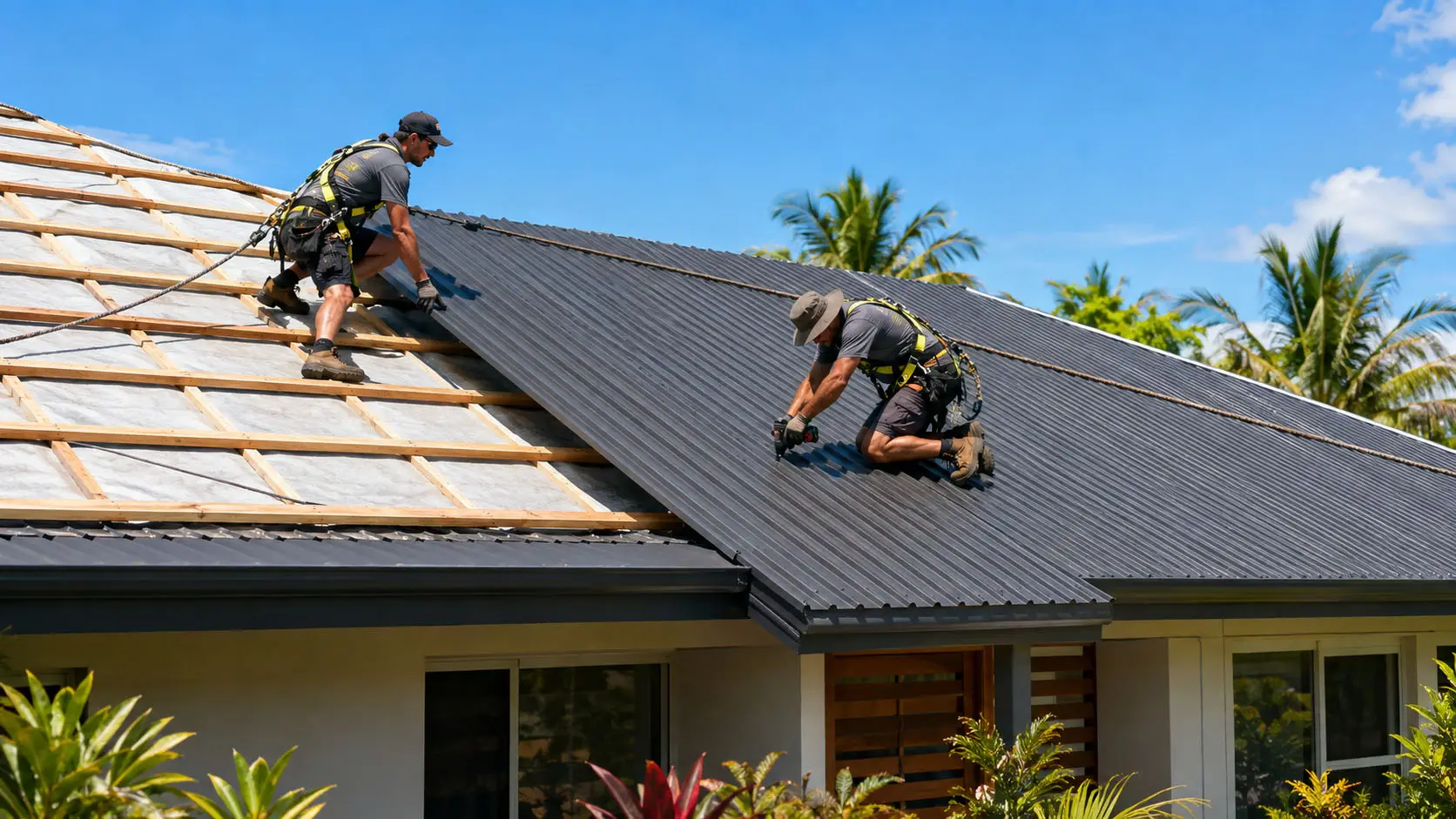
4. Existing Roofing Is Removed
Old roofing materials are progressively removed.
This can reveal areas that were previously hidden, including:
- Damaged battens
- Deteriorated timber
- Failed underlay or sarking
- Previous water damage
- Inappropriate earlier repairs
A good quotation should explain how unforeseen conditions will be handled if they become visible after removal.
5. Preparation and Necessary Repairs
Before new roofing is installed, unsuitable underlying components may need attention.
This could include:
- Replacing damaged battens
- Preparing flashing areas
- Installing new sarking
- Repairing suitable supporting components
- Correcting previous installation problems
The performance of the finished roof depends heavily on what happens beneath the visible surface.
6. New Roofing Installation
New roofing is then installed using the appropriate system for the building.
Particular care is required around:
- Roof edges
- Ridges
- Flashings
- Wall junctions
- Penetrations
- Vents
- Changes in roof direction
These details are often where water entry begins if installation is poor.
7. Final Inspection
Once work is complete, the roof should be inspected before the project is signed off.
Items may include:
- Roofing alignment
- Fixings
- Flashings
- Ridge details
- Penetrations
- Sealants
- General workmanship
- Removal of loose materials and waste
Homeowners should retain their quotation, invoice and relevant warranty documentation.
Roof Replacement and Cyclone Conditions
Darwin’s exposure to tropical cyclones makes appropriate roofing installation particularly important.
Roofing systems need to be suitable for the building and location, and installation requirements may differ depending on factors such as:
- Wind classification
- Building design
- Roof shape
- Building height
- Property location
- Roofing material
- Fixing system
It would be inappropriate to claim that simply installing a new roof automatically makes a property “cyclone proof”.
Instead, the new roofing system should be specified and installed in accordance with the requirements that apply to that particular building.
Roof Replacement and Sarking
Removing an existing roof can provide an opportunity to inspect or install components beneath the roofing material.
One of these may be roof sarking.
Depending on the building and proposed roofing system, sarking can contribute to:
- Secondary weather protection
- Condensation management
- The overall roof system
- Protection beneath the external roofing
Whether sarking is required should be determined as part of the project scope rather than assumed.
What About Flashings?
Flashings form an important part of a weatherproof roofing system.
They may be located around:
- Walls
- Roof penetrations
- Pipes
- Vents
- Changes in roof level
- Other roof junctions
Installing a new roof while retaining badly deteriorated flashing can undermine the performance of the new roofing system.
The quotation should therefore clearly identify which flashing components are being replaced.
Roof Replacement Around Solar Panels
Existing solar systems can make a re-roofing project more complicated.
Panels may need to be:
- Disconnected
- Removed
- Safely stored
- Reinstalled
- Tested
Appropriately qualified solar or electrical contractors may need to be involved.
Solar panels should be identified during the quoting process so their removal and reinstatement can be planned rather than discovered immediately before roofing work begins.
How Long Does Roof Replacement Take?
There is no standard timeframe that applies to every Darwin reroof.
A straightforward residential project may take several working days, while larger or more complicated roofs can require considerably longer.
Factors affecting timing include:
- Roof size
- Roof complexity
- Building height
- Access
- Existing roofing material
- Amount of preparation required
- Hidden damage
- Number of penetrations
- Material availability
- Safety requirements
- Weather
Darwin’s tropical conditions are particularly relevant.
Heavy rain, high winds or unsuitable weather can delay roofing work, especially when sections of the building need to be temporarily exposed.
What Does Roof Replacement Cost in Darwin?
Roof replacement costs vary significantly between properties.
Important factors include:
- Roof area
- Existing roof material
- New roofing material
- Roof pitch
- Building height
- Accessibility
- Removal requirements
- Disposal costs
- Flashings
- Sarking
- Battens
- Structural repairs
- Number of roof sections
- Roof penetrations
- Safety equipment
- Scaffolding
Two homes with a similar internal floor area can have very different roofing costs because their roof designs may be completely different.
An inspection and detailed written quotation are therefore more useful than relying on a generic online price.
Why Quotes Can Vary So Much
A cheaper roof replacement quote does not necessarily mean the contractor has found a more efficient way to complete the same job.
Different quotations may include different:
- Materials
- Roof profiles
- Flashings
- Fixings
- Removal costs
- Sarking
- Preparation
- Waste disposal
- Safety systems
- Repair allowances
- Warranty terms
Likewise, the highest quote is not automatically the best.
Before choosing a contractor, compare exactly what is included and excluded.
Should You Repair an Old Roof Instead?
Sometimes, yes.
There is no benefit in replacing an otherwise serviceable roof simply because it has one repairable problem.
A targeted repair may remain the sensible choice where:
- The defect is isolated
- The surrounding material remains sound
- Corrosion is limited
- There are no widespread failures
- Previous repairs have performed well
The question becomes different when repairs are becoming increasingly frequent.
At some point, continuing to invest in an ageing roofing system may provide diminishing returns.
Can a Roof Be Restored Instead?
Potentially.
A weathered roof may still be suitable for restoration where the underlying material remains serviceable.
A professional restoration can address:
- Surface deterioration
- Cleaning
- Local repairs
- Rust treatment
- Ridge capping
- Preparation
- Roof painting
- Protective coatings
If the existing roof provides a sound base, roof restoration in Darwin may be considerably less disruptive than full replacement.
The decision should come from inspection rather than assuming that an older-looking roof automatically needs to be removed.
Does Roof Replacement Add Property Value?
A new roof can improve the presentation and condition of an ageing property.
Potential advantages may include:
- Improved street appeal
- Fewer immediate roofing concerns
- Reduced likelihood of recurring leaks
- A modernised appearance
- Greater confidence for prospective buyers
However, roofing contractors should not promise a specific increase in property value.
Market value depends on the entire property, its location and current market conditions.
The primary reason for replacing a roof should remain its condition and ability to protect the building.
Can a New Roof Improve Energy Efficiency?
Roof replacement can create an opportunity to review the overall roofing system, but a new roof should not automatically be presented as a guaranteed way to lower electricity bills.
A home’s thermal performance depends on:
- Roof colour
- Insulation
- Sarking
- Ventilation
- Windows
- Shading
- Building orientation
- Ceiling construction
- Air-conditioning use
Roofing choices can form part of a broader thermal strategy, but outcomes vary between properties.
Choosing a Roof Replacement Contractor in Darwin
Roof replacement is a significant project, so homeowners should check more than the quoted price.
Ask whether the contractor:
- Holds appropriate licences
- Carries suitable insurance
- Has experience with re-roofing
- Provides a written scope
- Identifies the proposed roofing system
- Explains preparation requirements
- Addresses safety
- Provides clear variation procedures
- Explains warranty terms
- Can provide examples of previous work
You should understand exactly what you are buying before the old roof is removed.
Maintaining a New Roof
A new roof should still receive sensible ongoing attention.
Homeowners can help maintain it by:
- Checking for visible changes after severe weather
- Monitoring flashings and penetrations
- Managing nearby trees
- Avoiding unnecessary roof access
- Addressing damage promptly
- Following manufacturer maintenance requirements
- Keeping project and warranty documentation
Other contractors working on the roof for solar, antennas or air-conditioning should also take care not to damage roofing materials or coatings.
Making the Right Decision for Your Darwin Roof
Roof replacement is not always necessary, but it can become the most practical option when an existing roof has deteriorated beyond sensible repair or restoration.
The best decision usually comes down to three questions:
Can the defect be reliably repaired?
Is the existing roof still suitable for restoration?
Or has deterioration reached the point where investing in the existing system no longer represents good value?
At Roof Restoration Services Darwin, we assess the roof first and explain the available options before recommending repair, restoration or replacement.
If your roof is repeatedly leaking, heavily corroded, storm damaged or showing widespread signs of deterioration, contact our Darwin roofing team for a free inspection and quote.